|
The Congress of Aboriginal Peoples (CAP) is a national “umbrella” organization that represents the interests of its provincial and territorial affiliate organizations. The CAP head office in Ottawa is the center of operations for its elected National Chief and Vice Chief, its administrative staff, program managers and coordinators, and consultants specializing in various topics affecting Aboriginal Peoples. This office manages the day-to-day activities of CAP, its affiliates and its Board of Directors.
The Congress of Aboriginal Peoples as a National Aboriginal Organization represents the interest of off-reserve non-status and status Indians, and Métis Aboriginal peoples living in urban, rural, remote and isolated areas throughout Canada. We are also the national voice for the constituency and their affiliate organizations making up the Congress family of advocates for the off-reserve Aboriginal Peoples of Canada.
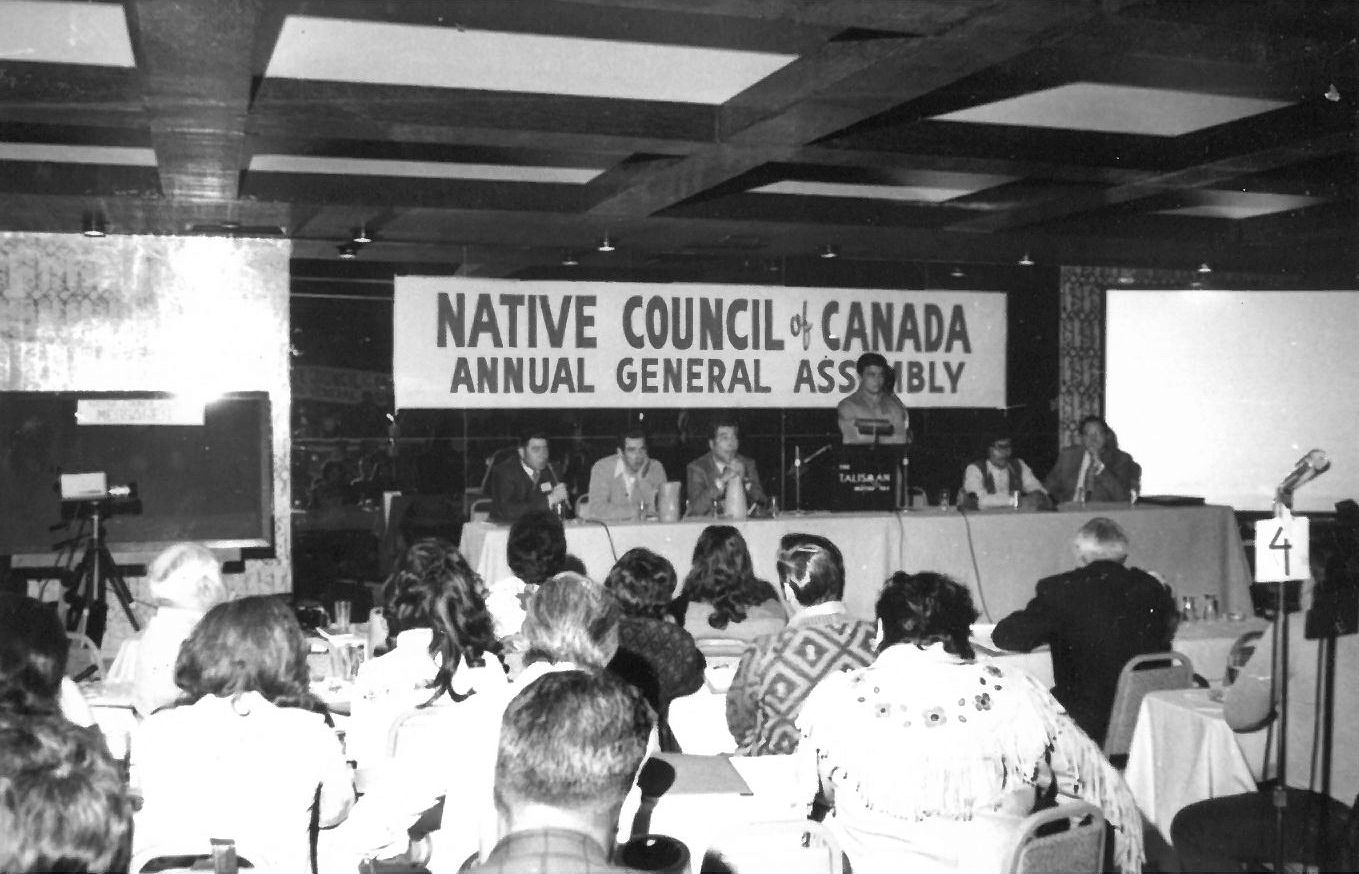
The Congress of Aboriginal Peoples (CAP), was established in 1971 as the Aboriginal Council of Canada, and is one of five Aboriginal representative organizations recognized by the Federal Government.
CAP aims to provide information about CAP, its activities, programs and services, affiliates, etc., as well as information about Aboriginal Peoples in general, and legislation affecting Aboriginal Peoples. CAP represents the voice of the Aboriginal Peoples of Canada and works with the government to establish programs and services to benefit and abolish barriers that hinder those whom we represent.
CAP itself does not provide individual memberships, programs or services. The "members" of CAP are its affiliate Provincial/Territorial Organizations (PTOs). Each affiliated PTO is a provincial or territorial organization which is legally associated with the Congress of Aboriginal Peoples. Each has its own constitution, memberships, and elected executive officers with its own administrative staff and program officers.
Aboriginal Peoples Survey – Education and Employment
Enquête auprès des peuples autochtones – Éducation et emploi

|